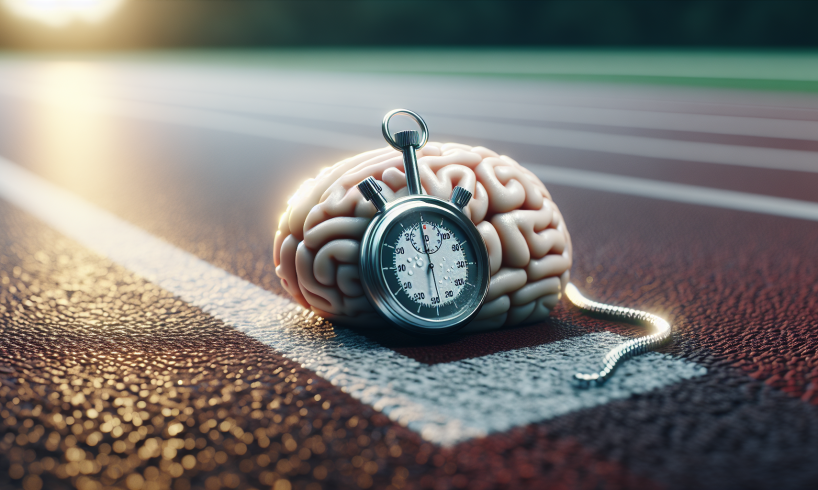
Have you ever noticed that your body can be in peak condition but your mind keeps getting in the way of consistent performance?
Training The Mind For Consistency And Focus In Athletics
This article guides you through practical, evidence-informed ways to build mental fitness so you can perform reliably under pressure. You’ll get clear techniques, routines, and metrics to improve focus, consistency, and overall mental strength specific to sport.
Buy The ‘Training The Mind For Consistency And Focus’ Guide
Why Mental Fitness Matters in Athletics
Mental fitness underpins how reliably you perform skills, make decisions, and recover from setbacks in training and competition. When your mind is trained, physical training yields greater return on investment because you’re better at executing skills under fatigue, stress, and changing contexts.
Get Your Copy Of The Mental Training Program
The Difference Between Physical and Mental Training
Physical training builds muscles, speed, and endurance through repeated practice and recovery. Mental fitness training builds attention, emotional control, and resilience through targeted exercises, habits, and routines. You’ll benefit most when you train both in parallel and integrate mental fitness into your everyday sport practices.
The Science Behind Focus and Consistency
Focus and consistency rely on attention networks, executive control functions, and emotion regulation systems in the brain. Neuroplasticity means these networks adapt with repeated practice, so the mind becomes better at sustaining focus, shifting attention when needed, and resisting distractions over time. You’ll experience improvements through consistent, progressive practice rather than one-off efforts.
How Mental Fatigue Affects Performance
Mental fatigue reduces cognitive resources available for deliberate practice and decision-making, increasing errors and decreasing precision. You’ll notice slowed reaction time, poorer decision-making, and decreased motivation when mental fatigue accumulates. Managing mental load is as important as managing physical fatigue.
Core Mental Fitness Skills for Athletes
Develop a toolkit of mental fitness skills that you can call on in training and competition. These include attention control, emotional regulation, imagery, productive self-talk, routine discipline, and recovery skills. Each skill contributes to better consistency and focus by shaping how you prepare, perform, and respond to setbacks.
Attention Control
Attention control helps you prioritize relevant cues and filter out distractions during play. You’ll train attention by practicing selective focus, sustained focus, and flexible switching between tasks. Exercises that gradually increase demands on attention strengthen your ability to maintain focus under stress.
Emotional Regulation
Emotional regulation lets you manage arousal, anxiety, frustration, and excitement so emotions don’t sabotage technique. You’ll develop regulation through breathing, cognitive reframing, and acceptance strategies so your body and mind stay calibrated for consistent execution.
Visualization and Imagery
Visualization rehearses successful performance in your mind to strengthen neural patterns linked to skill execution. You’ll use imagery to consolidate technique, rehearse routines, and reduce anxiety by simulating successful outcomes ahead of competition. Mental imagery must be vivid, multi-sensory, and rehearsed regularly.
Self-Talk and Cognitive Restructuring
Your inner dialogue influences confidence, motivation, and focus. You’ll train self-talk by noticing negative or distracting thoughts, reframing them into productive cues, and rehearsing concise performance-focused phrases. Over time, this habit improves decision speed and resilience under pressure.
Goal Setting and Process Focus
Goal setting anchors your mental training by clarifying what you’ll practice and why. You’ll emphasize process goals (what you control) rather than outcome goals so consistent behaviors lead to reliable performance. Breaking long-term goals into micro-goals gives daily direction and measurable progress.
Routine Development and Pre-performance Rituals
Routines create psychological consistency before and during competition. You’ll craft pre-performance rituals that cue focus and calm, reduce cognitive load, and remove indecision. Consistent routines produce reliable mental states that support repeatable performance.
Resilience and Recovery
Building resilience means you’ll bounce back faster from mistakes and losses. Recovery strategies—sleep, nutrition, active rest, and psychological detachment—maintain your mental fitness by replenishing cognitive resources. You’ll treat recovery as non-negotiable training time.
Mental Fitness Training: Principles to Follow
Effective mental fitness training follows the same principles as physical training: specificity, progressive overload, regularity, and recovery. You’ll structure your mental fitness training with measurable targets, regular practice sessions, and gradual increases in difficulty to build capacity over weeks and months.
Specificity and Contextual Practice
Train mental skills in contexts that match competition as closely as possible. You’ll simulate pressure, noise, fatigue, and decision speed during practice to prepare attention and emotional systems for the demands you’ll face on game day. Contextual practice promotes transfer of mental fitness to performance.
Progressive Overload for the Mind
Increase the challenge of mental tasks gradually so you keep improving without burning out. You’ll start with simple focused-attention exercises and scale to complex multi-tasking and high-pressure simulations. Track perceived difficulty and adjust so growth is steady.
Regularity and Habit Formation
Consistency in mental training matters more than occasional intense sessions. You’ll build mental fitness habits by attaching short exercises to existing daily routines—like a five-minute focus practice after warm-up or a nightly reflection after dinner. Small, repeated actions compound into lasting change.
Recovery and Mental Rest
Recovery is essential to consolidate gains and avoid cognitive exhaustion. You’ll schedule mental rest days, micro-breaks during training, and periods of psychological detachment from sport. These practices protect your attention system and keep motivation intact.
Mental Fitness Exercises You Can Start Today
Below are practical exercises organized by skill area. Each exercise is short, specific, and designed to fit into training sessions so mental fitness training becomes integrated rather than additional work.
Focus and Attention Exercises
Practice concentrated, purpose-driven attention exercises to strengthen selective and sustained focus. You’ll use incremental time challenges, distraction insertion, and dual-task drills that mimic competition demands.
- Single-point focus: Pick a physical cue (breathing, foot contact) and sustain attention for timed intervals, gradually increasing duration.
- 3-2-1 Switch: Maintain focus on three different cues for set times, then switch to two, then one under time pressure.
- Distraction training: Add crowd noise or verbal distractions while performing technical reps, then refocus on the key cue immediately.
Emotional Regulation Exercises
Train your nervous system to move quickly from high arousal back to a performance-ready state. You’ll use breathing, labeling, and brief cognitive reframes.
- Box breathing: Four counts inhale, four counts hold, four counts exhale, four counts hold. Repeat to lower arousal before performance.
- Name it to tame it: Verbally label emotions for 30 seconds to reduce their intensity and increase control.
- Reframing drill: After each mistake in practice, state what you learned and a next-step process goal before the next rep.
Visualization Exercises
Practice imagery sessions that recreate the sensory experience of successful performance. You’ll use multi-sensory details and pre-mapped cues for routine execution.
- Multi-sensory rehearsal: For five minutes, visualize performing with vivid sights, sounds, tactile sensations, and emotions. Repeat focused scenes from competition.
- Outcome-to-process visualization: Visualize a challenging moment, then mentally rehearse the process sequence that brings success rather than fixating on final results.
Self-Talk Exercises
Build a bank of concise phrases and practice switching from negative to constructive self-talk quickly.
- Phrase development: Create 6–9 short performance cues (e.g., “on the ball,” “soft hands,” “finish strong”) and rehearse them during drills.
- Thought-stopping: When negative thoughts arise, use a brief physical cue (finger snap) and replace the thought with a performance phrase.
Consistency-Building Habits and Routines
Below is a weekly sample routine that integrates mental fitness training with physical sessions. Use it as a template and adjust intensity, duration, and timing to your sport and schedule.
| Day | Physical Focus | Mental Fitness Focus | Time/Duration |
|---|---|---|---|
| Monday | Skills + strength | Attention practice; 10-min visualization | 10–15 min |
| Tuesday | Endurance + technique | Emotional regulation drills; box breathing | 8–12 min |
| Wednesday | High-intensity intervals | Distraction training during skill reps | 10–15 min |
| Thursday | Skills + mobility | Self-talk rehearsal; pre-performance routine | 10 min |
| Friday | Tactical practice | Simulation under pressure; visualization | 15–20 min |
| Saturday | Competition-style scrimmage | Routine rehearsal; recovery strategies | 10 min |
| Sunday | Active recovery | Reflection, journaling, sleep hygiene | 15–20 min |
Mental Fitness Techniques for Competition Day
On game day you’ll want concise techniques that set your focus, reduce arousal, and deliver consistent performance. Use quick, reliable tools that fit into your routine.
Pre-Competition Routine
Your pre-competition routine primes focus and reduces decision fatigue. You’ll use a set sequence: physical warm-up, breathing reset, imagery, and a verbal focus cue. Stick to timing and steps so the routine becomes automatic.
During Competition: Short Reset Tools
When performance errors or momentum swings occur, you’ll need minimal-time resets. Use a 10–15 second breathing reset, an attention cue, and a short process phrase to bring your mind back to the present task.
Halftime and Break Management
Use half-time to recalibrate rather than rehearse anxiety-provoking scenarios. You’ll assess what worked, set two process priorities, and use calming rituals to recover mentally between efforts.
Building Mental Habits That Stick
Habit formation requires repetition, context cues, and simplicity. You’ll make mental fitness habitual by pairing exercises with existing routines and tracking consistency so you can see progress.
Habit Loop: Cue, Routine, Reward
Design habits using a clear cue (e.g., post-warm-up), a short routine (5–10 minute mental exercise), and a reward (positive self-acknowledgment or a small recovery ritual). This loop makes adherence more likely.
Tracking and Measuring Mental Fitness Improvement
You’ll measure mental fitness using subjective and objective markers. Rate perceived focus, count unforced mental errors, and track adherence to mental training. Over weeks you’ll see trends and can adjust difficulty accordingly.
| Metric Type | Example Measures | How to Use |
|---|---|---|
| Subjective | Focus rating (1–10), mood, confidence | Daily journaling and averaged weekly |
| Objective | Reaction time, decision error counts, shot dispersion | Use during controlled drills and analyze trends |
| Behavioral | Adherence to routine, sleep duration | Track with a simple checklist or app |
Progressive Program Example: 8-Week Mental Fitness Plan
Below is a compact plan you can use to develop consistency and focus over two months. Each week builds on the previous week’s skill load and context specificity.
| Week | Focus | Key Activities |
|---|---|---|
| 1 | Baseline and habit setup | Record baseline focus; establish 5-min daily attention practice |
| 2 | Sustained attention | Increase focused practice to 10 min; nightly reflection |
| 3 | Emotional control | Introduce breathing and labeling; use after mistakes |
| 4 | Imagery and self-talk | 10-min visualization sessions and cue bank creation |
| 5 | Contextual practice | Add distractions during technical drills; pressure simulations |
| 6 | Routine consolidation | Develop and rehearse pre-game and mid-game routines |
| 7 | Load and test | Simulated competition; measure performance under stress |
| 8 | Review and maintenance | Assess gains; set maintenance schedule and goals |
Troubleshooting Common Mental Roadblocks
You’ll face setbacks like inconsistent motivation, plateaued focus, and overtraining of the mind. Address these proactively with specific tactics.
If You’re Losing Motivation
Break tasks into micro-goals and reduce session length temporarily to rebuild consistent practice. You’ll also reconnect with meaningful goals—why you compete and what mastery means for you.
If Focus Plateaus
Change training context and increase variability to challenge attention systems. You’ll add noise, pressure, or simultaneous decision tasks to provoke adaptation.
If You Feel Mentally Exhausted
Prioritize recovery: sleep, nutrition, and psychological detachment. You’ll reduce cognitive load by cutting non-essential mental tasks and temporarily lowering training intensity.
Nutrition, Sleep, and Physical Recovery for Mental Fitness
Your brain needs energy and repair to function consistently. Balanced nutrition, stable blood glucose, and quality sleep are foundational to sustaining attention and resilience. You’ll treat these areas as part of your mental training protocol.
Sleep Hygiene
Sleep consolidates learning and replenishes cognitive resources. You’ll aim for consistent sleep schedules, a dark and cool environment, and a wind-down routine to maximize restorative sleep.
Hydration and Fueling
Hydration and proper fueling support attention and reaction time. You’ll plan pre-training meals and in-session fueling to avoid cognitive dips from low blood sugar or dehydration.
Measuring Progress and Setting New Targets
Regularly evaluate both subjective ratings and objective performance to see if your mental fitness training is producing consistent improvement. You’ll adjust targets and training complexity as you progress to avoid stagnation.
Simple Weekly Review Template
At the end of each week, take five minutes to answer: How focused were you on a scale of 1–10? What mental errors occurred most often? Which mental exercise was most helpful? This brief review helps you iterate quickly.
Coaching Considerations: Training Teams and Groups
When you train a team, mental fitness becomes shared culture and practice. You’ll integrate group routines, shared language, and team drills that build collective focus and consistent performance under pressure.
Group Routines and Communication
Establish common cues, standardized breathing routines, and shared pre-game rituals so the entire team can settle into synchronized performance states. You’ll use team debriefs to normalize learning from mistakes without blame.
Individual Differences and Personalization
Every athlete has unique strengths and triggers. You’ll personalize mental fitness training by experimenting with different techniques and monitoring which produce the best subjective and objective improvements. Flexibility allows you to find the optimal mix for your needs.
Common Myths About Mental Training
Address myths so you don’t waste time on ineffective approaches. You’ll learn that mental training isn’t only about “relaxation” or “positive thinking”; it’s about structured practice, measurement, and progressive overload—similar to physical training.
Myth: One Meditation Session Fixes Performance
Meditation helps, but its benefits accrue through regular practice and integration into sport-specific contexts. You’ll commit to consistent practice and pair meditation with active mental skills for better transfer.
Myth: Mental Skills Are Only for Elite Athletes
Mental fitness benefits athletes at every level because attention, emotion regulation, and routine discipline improve learning and performance. You’ll start with small, achievable practices and scale up.
Practical Checklist to Begin Your Mental Fitness Journey
Use this practical checklist to begin building consistency and focus today. Each item is actionable and designed to form habits that stick.
- Record baseline focus and errors for one week.
- Choose three short daily mental exercises (5–15 minutes total).
- Create a 6–9 phrase cue bank for self-talk.
- Design a 3-step pre-performance routine and rehearse it.
- Schedule one weekly reflection and one monthly performance review.
- Prioritize sleep and hydration as core training elements.
- Track adherence using a simple checklist or app.
Long-Term Maintenance and Growth
Mental fitness is a lifelong process; you’ll maintain gains by keeping practices simple, context-specific, and progressively challenging. Reassess goals periodically and vary your training to match evolving demands and new competitive levels.
When to Seek Professional Help
If anxiety, intrusive thoughts, or other mental health concerns significantly impair performance, you’ll consult a sport psychologist or licensed mental health professional. They’ll provide tailored interventions that complement your training.
Final Thoughts on Training Your Mind
Consistency and focus in athletics come from systematic, integrated mental fitness training that complements your physical preparation. You’ll build skills incrementally, measure progress, and create simple, repeatable routines that deliver more reliable performance when it matters most.
If you start with small, consistent steps—daily attention work, brief emotional regulation practices, and repeated routine rehearsal—you’ll create a sturdy mental foundation that supports peak performance across training and competition.
Purchase The Athlete’s Consistency & Focus Workbook
Unity Oneness Project Please note: all our products we sell go directly to the Unity Oneness Project so please support us, thank you.