? What would change in your life if you treated curiosity like a daily workout for your mind?
Buy The Curiosity & Lifelong Growth Guide
Encouraging Curiosity And Lifelong Mental Growth
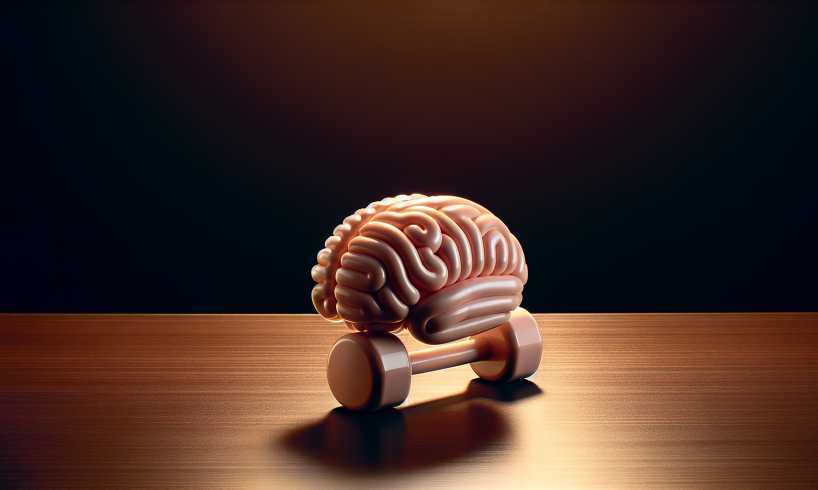
You can build mental fitness the same way you build physical fitness: with regular practice, progressive challenges, and habits that support recovery. This article gives you practical strategies, exercises, routines, and mindset shifts that encourage curiosity and promote lifelong mental growth.
Why this matters now
Your brain is plastic across the lifespan, and curiosity acts like a fuel that keeps that plasticity active. When you intentionally cultivate curiosity, you improve cognitive skills, emotional resilience, and the capacity to adapt to new situations.
Purchase The Lifelong Learning Toolkit
What is mental fitness?
Mental fitness refers to the set of cognitive, emotional, and behavioral capacities that help you think clearly, learn efficiently, and thrive under stress. It emphasizes skills you can train rather than fixed traits you either have or lack.
How mental fitness differs from mental health
Mental fitness focuses on enhancement and performance—strengthening skills like attention, memory, creativity, and self-regulation—while mental health often addresses the presence or absence of disorders. You can work on mental fitness both to optimize performance and to support long-term mental well-being.
Components of mental fitness
You develop mental fitness through several interlinked components that each respond to targeted exercises and lifestyle choices. Each component supports the others, so a balanced approach yields the best long-term results.
Cognitive skills
These include attention control, memory, processing speed, and reasoning. You can improve them through targeted cognitive exercises, learning new skills, and strategic practice.
Emotional regulation
Being able to notice, name, and manage your emotions improves decision-making and persistence. Techniques like mindfulness, cognitive reframing, and controlled exposure to stressors strengthen this capacity.
Social intelligence
Skills like empathy, active listening, and perspective-taking make learning more rewarding and increase your access to new information. Social interaction is also a powerful stimulus for curiosity.
Physical health and recovery
Nutrition, sleep, and movement are foundational. Your brain relies on high-quality sleep, regular aerobic activity, and nutrient-dense food to maintain plasticity and learning capacity.
Principles of mental fitness training
A structured approach helps you avoid randomness and accelerate growth. Use principles similar to physical training: consistency, progressive challenge, variation, recovery, and metrics.
Consistency and frequency
Small, frequent practices build stronger pathways than rare, intense sessions. Aim for short daily sessions rather than occasional marathon learning sprees.
Progressive overload
Gradually increase difficulty, complexity, or novelty to continue provoking adaptation. If a task becomes easy, add constraints, speed, or subtle complexity to keep it challenging.
Variation and cross-training
Rotate exercises to train different cognitive systems and avoid plateaus. Mixing memory drills with creativity tasks and social challenge sessions gives you broader gains.
Recovery and rest
Your brain consolidates learning during rest and sleep. Schedule downtime and avoid chronic stress to maximize gains and prevent burnout.
Mental fitness exercises and techniques
Practical exercises give you actionable ways to train attention, memory, reasoning, and creativity. Below are categories and sample activities that you can integrate into a daily routine.
Attention training
Attention is the foundation of learning. Practice focused attention through short sessions of single-task work, gradually increasing duration and resisting distractions.
- Use the Pomodoro method (25–50 minutes focus, short break).
- Set a single intention before a task and remove digital interruptions.
- Practice sustained attention with reading or focused listening sessions.
Memory techniques
Memory supports learning and curiosity by letting you connect new information to what you already know. Use spaced repetition, elaborative encoding, and mnemonics to boost retention.
- Create memory palaces for complex sequences.
- Use spaced-repetition apps for gradual consolidation.
- Tell stories that link facts to vivid images to improve recall.
Problem-solving and reasoning practice
Challenging problems expand your ability to reason under uncertainty. Solve puzzles, engage in case studies, or work on open-ended projects.
- Tackle logic puzzles and strategy games.
- Work on real-world problems with constraints and incomplete information.
- Practice “rubber duck debugging”—explain your thinking aloud to clarify reasoning.
Creative thinking exercises
Curiosity and creativity are closely linked. Use techniques that push you beyond habitual thought patterns and encourage associative thinking.
- Use forced connections: pair unrelated words and write a short idea that links them.
- Limit constraints to spur innovation (e.g., design something without using a specific material).
- Keep an ideas journal and ask “What if?” questions regularly.
Mindfulness and metacognition
Mindfulness trains attention and awareness of internal states, while metacognition makes you aware of your learning strategies and biases.
- Practice brief breath-focused mindfulness sessions.
- After a learning session, write down what worked, what didn’t, and how you’ll change it next time.
- Use self-questioning (e.g., “Why did I choose this approach? What assumptions did I make?”).
Physical movement that supports cognition
Movement boosts blood flow and releases neurotrophic factors that support learning. Incorporate regular aerobic and coordination-based activities.
- Walk while taking a phone call or thinking through a problem.
- Do short high-intensity movement breaks during long mental sessions.
- Practice balance or coordination drills to engage motor-cognitive networks.
Sleep, nutrition and recovery practices
Quality sleep consolidates memory and clears metabolic byproducts. Nutrition supports neurotransmitter systems, and recovery prevents fatigue-related decline.
- Prioritize 7–9 hours of sleep and keep a consistent schedule.
- Eat balanced meals with omega-3s, vitamins, protein, and fiber.
- Use relaxation routines before bed to improve sleep onset.
Practical exercise table
This table gives you clear, actionable exercises with recommended duration and benefit focus so you can pick what matches your goals.
| Exercise | Duration | Frequency | Primary Benefits |
|---|---|---|---|
| Focused reading (no phone) | 20–45 min | Daily | Attention, comprehension |
| Spaced-repetition review | 10–20 min | 4–6x/week | Memory retention |
| Logic puzzles / Sudoku | 15–30 min | 3–5x/week | Reasoning, problem solving |
| Creative prompts (freewriting) | 10–20 min | Daily or 5x/week | Divergent thinking |
| Short mindfulness session | 5–15 min | Daily | Attention, stress regulation |
| Aerobic walk or run | 20–40 min | 3–5x/week | Neuroplasticity, mood |
| Social learning conversation | 30–60 min | 1–3x/week | Perspective, curiosity stimulus |
| Sleep hygiene routine | 20–60 min | Daily | Memory consolidation, recovery |
Mental fitness habits and routines
Building sustainable habits is essential for lifelong growth. You achieve compounding results through small consistent behaviors that become automatic over time.
Core daily habits
Establish a few core habits that anchor your day and act as scaffolding for more complex practices.
- Morning intention: set one cognitive goal for the day.
- Short focused session: a 20–30 minute block of deliberate practice.
- Evening reflection: note one learning and one question you still have.
Weekly and monthly habits
Longer sessions and reflective practices help you integrate learning and measure progress.
- Weekly deep-learning session (90–120 minutes) for complex projects.
- Monthly review: check goals, revise strategies, and schedule new learning tasks.
- Skill swaps or mentoring sessions to expose you to new perspectives.
Sample daily routine
A sample routine helps you visualize how practices fit together. Adjust timing and content to your life.
- Morning: 10 minutes of mindfulness, 20 minutes of focused learning.
- Midday: 20–30 minute walk with an audio lecture or podcast.
- Afternoon: 45–60 minutes of focused work on a challenging problem.
- Evening: 10 minutes journaling about curiosities and next-day intentions.
Developing mental fitness skills
You can intentionally structure a learning plan that targets the skills you want to grow. Use goal-setting, measurement, and reflection to guide development.
Setting goals
Set clear, time-bound goals with measurable indicators so you know when to adjust. Use SMART criteria: Specific, Measurable, Achievable, Relevant, Time-bound.
- Example: “Improve your working memory score by practicing 15 minutes/day of dual n-back 5 days/week for 8 weeks.”
- Break goals into micro-goals that are easy to complete and celebrate.
Tracking progress
Measurement helps you stay accountable and reveals what works. Combine objective metrics with subjective reflection.
- Use simple metrics: minutes practiced, number of sessions, self-rating of mental clarity.
- Collect performance data with periodic cognitive tasks or quizzes.
Adapting and scaling
As you improve, change the stimulus to prevent adaptation. Scale difficulty incrementally and add diversity as you progress.
- Increase task complexity, reduce hints, or add time pressure.
- Introduce social or creative constraints that require flexible thinking.
Encouraging curiosity daily
Curiosity flourishes with deliberate practices that make asking questions safe, rewarding, and habitual. You can adopt simple rituals that prime your brain to notice novelty.
Ask better questions
The quality of your questions guides what you learn. Practice open-ended, specific, and curiosity-focused questions.
- Start with “What surprised me today?” or “What do I want to understand better?” each evening.
- Use the 5 Whys method to go deeper into causes and mechanisms.
Curiosity rituals
Rituals anchor curiosity into daily life and make it habitual.
- Begin each work session by listing one thing you don’t know about the topic.
- Keep a “question jar”: write down questions as they occur and revisit them weekly.
Read and learn widely
Cross-domain learning creates novel associations and feeds curiosity. Vary your sources and genres regularly.
- Read fiction, technical articles, history, and current events in rotation.
- Try a new hobby or class every few months to challenge your assumptions.
Social and environmental supports
Your environment and social circle significantly affect how curious and mentally fit you become. Shape both intentionally.
Create a curiosity-friendly environment
A supportive environment reduces friction and increases the likelihood you’ll act on curiosity.
- Designate a clutter-free learning space with minimal distractions.
- Keep tools and materials handy for quick learning sessions (notebooks, accessible books, apps).
Leverage social structures
Social connection provides motivation, feedback, and new ideas. Make learning a shared experience when possible.
- Join a small study group or book club that values questioning.
- Pair up with an accountability partner for weekly check-ins on mental fitness goals.
Technology and tools for mental fitness
Digital tools can amplify your practice, but they should serve habit formation rather than distract you. Use apps and platforms that track progress and limit friction.
Recommended app types and use cases
Choose tools that align with your aims: memory apps for spaced repetition, distraction blockers for focus, and journaling apps for reflection.
- Spaced repetition: Anki, Quizlet.
- Focus and time management: Forest, Focus To-Do, browser blockers.
- Mindfulness: Headspace, Insight Timer.
- Creativity and note-taking: Obsidian, Notion, paper journals.
Tool usage table
This table helps you match tools to specific needs and practice types.
| Tool type | Example apps | Best for | Suggested session length |
|---|---|---|---|
| Spaced-repetition | Anki, Quizlet | Vocabulary, facts | 10–20 min/day |
| Distraction control | Forest, Freedom | Deep work | 25–90 min sessions |
| Mindfulness | Headspace, Insight Timer | Attention, stress | 5–20 min/day |
| Note-taking / idea capture | Notion, Obsidian | Creative linking | As needed |
| Habit tracking | Habitica, Streaks | Habit consistency | Quick daily check-in |
Measuring improvement
You’ll want to know whether your efforts are paying off. Combine objective measures with subjective indicators to get a well-rounded picture.
Objective metrics
Use tests, timed tasks, and repeatable drills to track cognitive improvements.
- Timed reading comprehension tests, recall tests, or brain-training app scores.
- Work-product metrics: number of projects completed, speed of problem resolution.
Subjective and functional metrics
Measure how you feel and perform in real life—this is often the most relevant indicator of growth.
- Self-ratings of focus, stress tolerance, and curiosity.
- Feedback from peers: Are you more engaged in conversations? Do you generate more ideas?
Overcoming common barriers
You’ll encounter obstacles such as time constraints, fear of failure, and boredom. A few targeted strategies help you push past each barrier.
Time and busy schedules
Micro-practices and integration into daily activities make training feasible for busy lives.
- Use 5–10 minute blocks during transit or breaks.
- Replace a low-value habit (social scrolling) with a short curiosity ritual.
Fear of failure or looking ignorant
Normalize not knowing as the starting point of learning. Create low-stakes environments to practice asking questions.
- Use anonymous forums or private journals to experiment with ideas.
- Start conversations with curiosity phrases like “I’m curious about…” to soften the social risk.
Boredom and plateaus
Variety and progressive difficulty keep you engaged. When a practice becomes stale, tweak constraints or change modalities.
- Swap modalities: if you’re tired of reading, try a podcast on the same topic.
- Add challenge: increase the speed or complexity of tasks gradually.
Age-related concerns
Aging brings changes, but evidence shows you can continue learning and improving cognitive function across decades.
- Focus on a mix of aerobic exercise, social engagement, and mentally challenging activities.
- Prioritize recovery and adapt volume rather than intensity as needed.
Designing a 12-month growth plan
A long-term plan gives you structure and helps you measure sustainable progress. Below is a sample 12-month framework you can adapt to your needs.
Quarterly focus areas
Break the year into quarters and assign themes that build on each other: foundation, skills, integration, and expansion.
- Q1 (Foundation): Build basic habits—sleep, short focused practice, and mindfulness.
- Q2 (Skills): Add targeted training—memory, attention, problem-solving drills.
- Q3 (Integration): Apply skills to real projects and social learning.
- Q4 (Expansion): Tackle a creative or complex learning challenge and review progress.
Sample 12-month schedule table
Use this table as a template. Adjust time commitments and targets based on your availability.
| Quarter | Focus | Weekly time | Key milestones |
|---|---|---|---|
| Q1 | Habits & recovery | 3–5 hrs | Consistent sleep, daily 15-min focus sessions |
| Q2 | Cognitive skills | 4–6 hrs | Visible improvement on memory/attention drills |
| Q3 | Application | 5–8 hrs | Complete 1-2 applied projects (e.g., teach a mini-course) |
| Q4 | Creative expansion | 6–10 hrs | Launch a public creative or research project |
Troubleshooting and maintaining motivation
When motivation wanes, you can use strategies to restore momentum and rekindle curiosity. Your goal is sustainable practice, not perfection.
Accountability and public commitment
Sharing goals with a friend, mentor, or community increases follow-through.
- Schedule regular check-ins and small public commitments like a monthly blog post or talk.
- Use short-term rewards to celebrate consistency rather than only outcomes.
Variety and novelty
Rotate practices and add novelty to keep engagement high. New experiences often trigger curiosity naturally.
- Try a class in an unrelated field every 6–12 weeks.
- Use travel or short trips to stimulate new perspectives and questions.
Internal motivation: purpose and meaning
Connect your mental fitness practices to personal meaning to make them resilient to setbacks.
- Link learning goals to concrete outcomes (career, relationships, hobbies).
- Keep a “why” journal that reminds you of the deeper reasons for learning.
Making curiosity contagious in your life
You become an agent of curiosity when you model question-based learning and create cultures that value questions over answers.
At home and with family
Encourage family rituals that prime curiosity.
- Use shared mealtimes to ask one open question each person answers.
- Create a family project where everyone contributes and learns together.
At work and in teams
Promote psychological safety so team members feel comfortable asking questions and proposing experiments.
- Start meetings with a “what are we curious about?” minute.
- Celebrate experiments and failure as learning opportunities.
Resources and next steps
You don’t need to use expensive programs to build mental fitness—start with consistent small practices and the right environment. Keep learning how you learn best and refine your plan as you go.
Starter checklist
Begin with a few tangible items you can implement this week.
- Set a sleep schedule and commit to 7–9 hours nightly.
- Schedule a daily 20-minute focused practice block.
- Choose one cognitive skill to train this month and set a measurable goal.
- Start a curiosity journal and write one question per day.
Final thoughts
You can treat curiosity like a muscle that gets stronger with use, and mental fitness as a lifelong practice that adapts as you grow. By combining structured exercises, supportive habits, environmental design, and social reinforcement, you’ll sustain curiosity and continue to develop cognitively, emotionally, and socially over the long term.
Take one small action today—write a question you don’t yet have the answer to, and commit to following it for a week. That single act of curiosity is the first step toward sustained mental fitness and lifelong growth.
Get The Complete Guide To Fostering Curiosity
Unity Oneness Project Please note: all our products we sell go directly to the Unity Oneness Project so please support us, thank you.