

Browse Education Website Ownership articles
An education website listing can look like a quick route to a ready-made business. The useful question is more specific: what exactly would transfer, what can the buyer verify, and what work would remain after purchase? A live catalog, course count, and attractive theme show part of the offer, but they do not by themselves establish ownership rights, revenue, support obligations, or fit with your plan. This guide offers a due diligence checklist for the Digital Academy Hub listing and similar sites.
Define the thing being sold
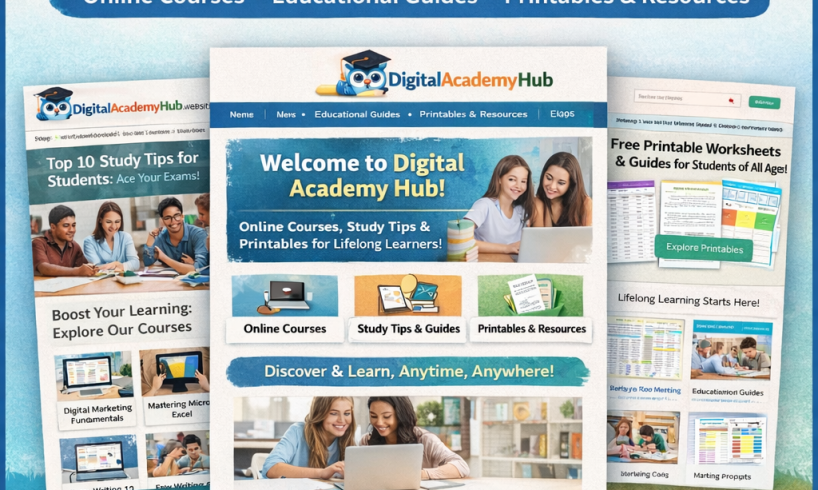
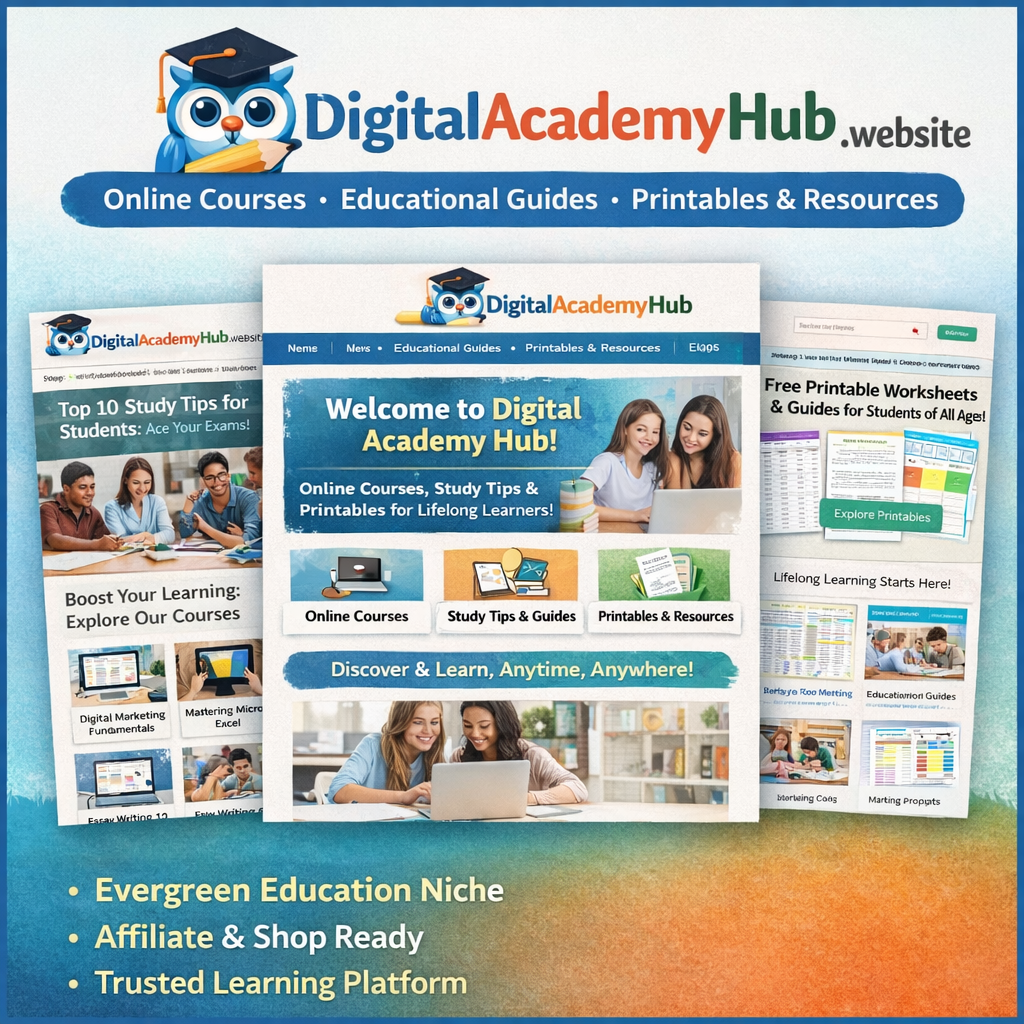
Start by reading the product listing line by line. The Digital Academy Hub listing describes an education website with courses and digital products, a domain for one year, and a hosting option. Ask the seller to specify which files, databases, accounts, content, licenses, assets, and support are included. A screenshot of a storefront is not a transfer inventory. Write the answers into the purchase agreement or another clear written record before paying.
Visit the live site as a visitor. Try navigation, course pages, shop pages, checkout information, policies, and contact details. A working page today does not prove that you will receive the right to use every element tomorrow. Record which claims you observed and which depend on seller-provided evidence. If a listing mentions a count of courses or products, ask for a dated export or inventory with status and rights, because visible counts can change.
Define your intended use as well. Are you buying a domain and operational website, a content catalog, a customer base, or a starting design? These are different assets with different risks. A site that is suitable as a catalog may still require substantial work on licensing, marketing, customer support, and accessibility. Put your minimum acceptable deliverables in writing.
Verify ownership and the right to transfer
Ask who legally owns the domain and how the registrant change or account transfer will work. ICANN provides registrant information about rights and responsibilities, but the registrar's specific process also matters. Request the registrar, renewal date, any lock or dispute, and whether the domain is transferable now. A promise of “one year domain” should state who pays, which year, and what happens at renewal.
Ask who created or licensed the courses, images, videos, worksheets, and product files. Are rights transferable to a new owner? May you sell access, edit the material, or use it only under a personal license? Request copies of license terms and evidence of permissions. A seller's possession of a file is not the same as a commercial right to resell it. If a key asset cannot be transferred, reflect that in the deal rather than discovering it after purchase.
Check theme and plugin licenses too. A WordPress installation may depend on paid software tied to the seller's account. Ask which licenses continue, which require your own subscription, and whether updates and support will be available. If the site uses third-party course or payment services, learn how each account will be transferred or reconnected.
Inspect the technology without relying on a demo
Request a current backup and a staging demonstration if possible. Ask what platform, theme, plugins, and hosting environment the site uses. Verify that an authorized buyer or technical adviser can inspect administrator access, updates, backups, security settings, and error logs. Do not assume the public site shows every operational problem. Clarify whether the seller will migrate the site or merely provide files.
WordPress offers an export tool for content, but a content export is not necessarily a full site migration with media, configuration, user accounts, and commerce data. Ask for the specific deliverables you need and an agreed test after transfer. A rollback plan and a short transition window can help if a migration breaks links or checkout. Make a record of who is responsible for DNS, SSL, email, and payment setup.
If the listing offers monthly hosting, compare that option with your own provider. Ask whether the quoted fee includes backups, security updates, storage, bandwidth, support, and tax, and how the fee can change. Request terms for cancellation and moving away later. A low monthly price is not enough to evaluate long-term ownership.
Examine courses and products as a buyer
Do a sample audit, not just a count. Open a few course lessons, download samples where authorized, and inspect the product descriptions. Is the material complete, accurate, accessible, and suitable for the audience you plan to serve? Are there broken videos, empty modules, placeholders, or claims that need review? Note when the material was last updated.
Request a catalog export with title, status, file format, access method, creator, license, and any third-party dependencies. WooCommerce documentation explains that downloadable product delivery depends on configured file access and order handling. Test a purchase flow in a safe staging environment with the seller, including emails and download permissions. Do not use real customer data or payment credentials casually in a demo.
Ask what the seller means by “product.” A published listing, a downloadable file, and a fully supported course are not equivalent. If an item requires a subscription to an outside platform, include that continuing cost. If you cannot verify rights or quality for a substantial portion of the catalog, the headline count should carry less weight in your decision.
Check business claims with evidence
Revenue, traffic, and customer figures need source records for a defined period. Request read-only analytics, payment processor reports, refund and chargeback data, operating expenses, and a reconciliation that explains differences. Distinguish gross sales from net revenue, one-time payments from subscriptions, and organic visitors from paid campaigns. Do not infer future earnings from a busy-looking homepage.
Ask about customer support volume, unresolved complaints, obligations to existing students, and data privacy duties. A purchase may bring work as well as assets. Find out whether customers consented to any proposed transfer and what applicable agreements or laws require. For significant sums, a qualified legal or accounting adviser can review the agreement and evidence in your jurisdiction.
The FTC provides guidance about disclosures for endorsements and affiliate relationships. If the site contains such promotions, review the relevant pages and ask whether the relationships and disclosures can continue after transfer. You should not assume the seller's marketing claims or reviews are yours to reuse unchanged.
Write down the transfer and acceptance process
Make a deliverables list: domain, hosting or migration, WordPress administrator role, source files and database, media, course and product inventory, licenses, policy pages, analytics access, and any agreed training. Some accounts may need fresh setup under your identity. Decide who will provide credentials and when, then rotate them after transfer. Never rely on a casual chat message as the complete record of a high-value transaction.
Define acceptance tests. Can you log in? Do pages and course lessons load? Can a test order complete without charging a real customer? Are downloads accessible to the right user? Does email arrive? Are backups usable? Does the domain point to the agreed host? State how long the seller will have to fix documented transfer issues.
Clarify refunds, dispute process, governing terms, and what happens if a claimed asset cannot be transferred. A listing's “no refund” statement makes careful pre-purchase review even more important; do not assume it overrides rights in your jurisdiction. Seek professional advice if the contract is unclear or the value warrants it.
Questions to ask before paying
What is the exact asset inventory? Who owns the domain and content? Which licenses transfer? Can I inspect a working administrator view and a sample of course files? What are the last twelve months of independently checkable traffic, revenue, refunds, and expenses? What ongoing subscriptions and support work are required? Who performs migration, when will I receive access, and what tests define completion?
Ask the seller to answer in writing and supply evidence, not just confidence. If an answer is uncertain, mark it unresolved. You can decide that a gap is acceptable at a particular price, request a condition in the agreement, or decline. A strong decision does not require every site to be flawless; it requires you to know what you are actually buying.
Use the listing as a starting point
The Digital Academy Hub product page is a $750 offer for an education website. Its public description is a useful first overview. Compare every material claim with the live site, access records, rights documents, and a written transfer plan. The value depends on what is delivered, your ability to operate it, and costs after closing. Do not treat an article or listing as a promise of income or a substitute for contract review.
If the seller can show a clear inventory, transferable rights, a working demo, and a practical handover, you can assess the offer against your own goals. If key pieces remain undocumented, pause the purchase decision until they are. Your first task as a buyer is to replace attractive assumptions with verifiable facts.
Sources and further reading
- Digital Academy Hub, live site
- WordPress, Export screen documentation
- ICANN, Information for registrants
- WooCommerce, Digital/Downloadable Product Guide
- FTC, Disclosures 101 for Social Media Influencers
This buyer guide is educational. Listings and live sites can change. Verify transfer rights, operations, records, and contract terms directly; seek qualified legal, technical, or accounting advice where appropriate. No earnings or transfer outcome is guaranteed.
Explore the free companion articles
- What to Check Before Buying an Education Website (Available October 1, 2026, 3:42 PM Pacific)
- Reviewing Courses and Digital Products in a Website Purchase (Available October 1, 2026, 8:47 PM Pacific)
- Domain, Hosting, and Transfer Questions for a Website Buyer (Available October 2, 2026, 10:54 AM Pacific)
- How to Plan the First 30 Days After Buying a Learning Site (Available October 2, 2026, 2:49 PM Pacific)
- Education Website Monetization: What a New Owner Should Measure (Available October 2, 2026, 6:55 PM Pacific)