


Browse Education Website Ownership articles
An education website can earn money through courses, digital downloads, subscriptions, services, or referrals. The existence of those options says little about what a particular site currently earns or what a new owner could earn. Before projecting returns from the Digital Academy Hub listing, separate observed revenue from possible models, include the costs of operating the site, and choose a few measurements that answer real business questions. This guide is a framework for investigation, not an income forecast.
Start with verified past performance
Ask the seller for a defined period of payment processor records, store orders, refunds, chargebacks, and operating expenses. Reconcile the figures: gross sales minus refunds, processor fees, platform fees, taxes handled on behalf of customers where relevant, and direct fulfillment costs. Clarify whether the numbers are cash received, recognized revenue, or a dashboard total. A screenshot without account access or dates is weak evidence.
Segment the records by course, digital product, and other offer. A catalog with many listings may rely on a few sellers. Ask whether those top items, their rights, and their traffic sources will transfer. If an instructor, affiliate, or paid ad campaign generated the sales, the relationship and cost may change under new ownership. Historical performance is useful only when you understand what produced it.
If the seller cannot provide reliable records, record that limitation. You may value the site as a domain, design, and content assets instead of a profitable operation. Do not fill a missing revenue line with an assumed conversion rate taken from another business. The $750 asking price for Digital Academy Hub is a purchase cost, not evidence of future profit or payback time.
Map the ways a learner pays
A one-time course purchase has a different economic pattern from a membership or recurring subscription. A downloadable workbook may have low delivery costs but require customer support and updates. Services may earn more per customer but consume time. Write down each offer, price, refund terms, delivery promise, and ongoing obligation. Then ask which are actually active and which are ideas for the future.
Test the customer journey for a representative offer. Does a visitor understand who it is for and what they receive? Is the checkout functional? Does the learner obtain access promptly? Are follow-up emails accurate? WooCommerce documentation covers general digital-download handling; a buyer must inspect this site's settings and sample orders. A theoretical monetization model is irrelevant if the delivery path fails.
Be careful with affiliate links and endorsements. If the site recommends a product for compensation, review the relationship, rights, and disclosure. The FTC provides US guidance on clear disclosures for material connections; other jurisdictions may have additional requirements. Do not carry over seller claims or testimonials without checking accuracy and permission.
Count ongoing costs and labor
List domain renewal, hosting, plugin and theme licenses, course or video platform, email service, payment fees, storage, security, backups, advertising, contractors, and customer support time. Ask whether the offered monthly hosting price includes maintenance or just server space. Some costs rise with traffic or media use. Estimate both a quiet month and a month with more learners.
Your own time has a cost even if no invoice arrives. Course updates, rights management, refunds, technical troubleshooting, content creation, and email support can occupy hours. Keep a simple time log during the first month. If the site depends on an instructor or specialist to maintain content, include that role in the plan. A high gross margin on a PDF file may look different after support and marketing work.
Distinguish fixed costs from costs per order. A platform subscription is due whether or not a sale occurs; payment fees and some support work scale with orders. This distinction helps you estimate the number of sales needed to cover known costs, but the calculation is a scenario rather than a prediction. Show your assumptions and update them with observed data.
Choose a small set of useful measures
For traffic, track visits to relevant landing pages by source and period. For interest, inspect clicks to course or product pages. For sales, track completed orders and net revenue by offer. For service quality, monitor failed checkouts, access tickets, refunds, and repeat complaints. A number without a defined time window and source can be misleading.
Conversion rate can be useful when calculated consistently: completed purchases divided by relevant visits for the same period. But a small sample can swing dramatically. A promotion, search ranking change, or broken checkout may explain a shift. Annotate meaningful events so you do not mistake coincidence for a lasting trend. Privacy settings can also affect what analytics show.
Look at learning outcomes carefully. Course completion, lesson engagement, and feedback may tell you whether people can use the material. They are not automatic proof of a particular career or financial result. Ask learners what they expected and where they struggled, with appropriate consent. Improve a course promise only when the content and evidence support it.
Evaluate a possible change as an experiment
Suppose you want to improve a course page. Write the question first: “Do visitors understand what is included?” Review support tickets and page behavior, then make a specific edit such as adding a lesson outline and access details. Note the date and compare the following period with reasonable caution. Keep other major changes separate when practical, so you can interpret what happened.
Do not call a one-week increase proof of a successful strategy. Seasonality, campaigns, and a handful of buyers can produce a noisy result. If the change reduces confused support requests or increases completed purchases over a meaningful period, investigate further. A small business can combine numbers with direct learner feedback rather than pretending every decision has statistical certainty.
The same discipline applies to a new offer. Estimate production, rights, support, and marketing costs before launching it. State a test budget and a stop condition. Do not advertise an unfinished course as though it is ready. If preselling is contemplated, get advice on appropriate terms and delivery obligations.
Protect trust while seeking revenue
Clear descriptions, accessible content, support contact information, and honest refund terms can help a visitor decide. Avoid exaggerated claims about guaranteed earnings, certifications, or life changes. A learning site's long-term value depends on customers receiving what was promised. If you inherit questionable wording, review it against the actual content before promoting it.
Keep existing learner commitments in view. A buyer may want to change prices or bundle courses, but current purchasers may have access rights under earlier terms. Inspect those obligations and seek advice where needed. Revenue improvement should not come from silently withdrawing paid access or using customer data beyond permitted purposes.
Consider whether a free article genuinely answers a reader's question. Related articles can explain concepts and link to a product when relevant, but the content should stand on its own. The product page should say what the paid material adds. This approach helps readers make informed choices and gives the site a clear topic structure without making every paragraph a sales pitch.
Questions to ask about the listing
What are net sales by offer for the last twelve months, with source records? What are refunds, chargebacks, support hours, and operating costs? Which traffic sources are paid and which are organic? Who owns the courses and product files? What recurring subscriptions are required? Are existing learner obligations documented? Can the purchase and download journey be tested safely before transfer?
If the answer to a question is unknown, leave it unknown in your model. You can set a range for costs and test scenarios, but a single precise profit projection built on unverified assumptions is false comfort. An accountant or legal adviser can help with material purchases or complex obligations.
Common measurement mistakes
Is a large catalog evidence of high revenue?
No. Count functioning and transferable offers, then examine actual sales and net contribution by item. A long list can add maintenance without demand. A small group of well-supported products may account for most activity.
Can I rely on seller screenshots?
Use them as leads for questions. Request read-only source access or records that can be reconciled, with privacy protections. Define the period, units, and expenses behind each number. If verification is unavailable, treat the claim as unproven.
Should I start paid advertising immediately?
First verify that the site, checkout, delivery, support, and measurement work. Set a budget you can afford to lose and understand the unit economics of an offer. Advertising can amplify a broken process as easily as a working one.
Make the next decision measurable
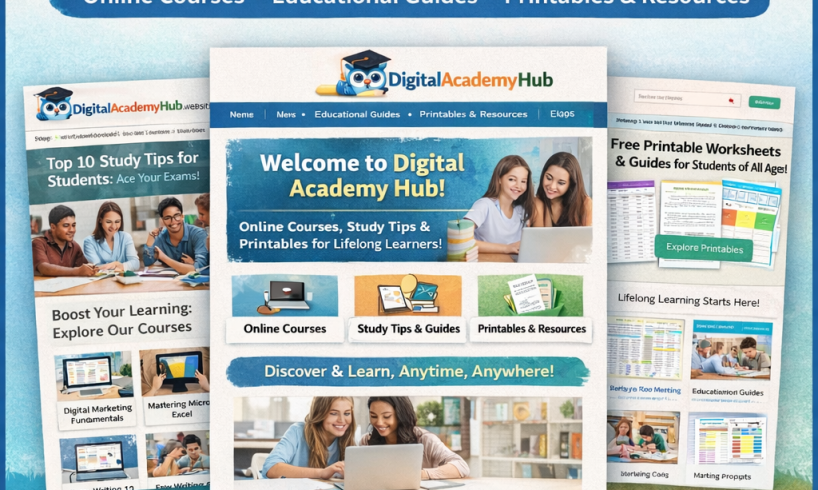
The Digital Academy Hub listing presents a $750 education site with courses and digital products. Its public page can introduce the offer, but a buyer needs source records, transferable rights, and a working delivery flow to assess monetization. Begin with verifiable history and known costs; then test modest changes against a documented baseline.
Write three numbers you will track, how each is calculated, and when you will review it. Pair them with a qualitative check on learner experience. That combination gives you a more honest operating plan than an earnings promise, and it helps you decide whether this particular website fits your resources and goals.
Sources and further reading
- Digital Academy Hub, live site
- WordPress, Export screen documentation
- ICANN, Information for registrants
- WooCommerce, Digital/Downloadable Product Guide
- FTC, Disclosures 101 for Social Media Influencers
This buyer guide is educational. Listings and live sites can change. Verify transfer rights, operations, records, and contract terms directly; seek qualified legal, technical, or accounting advice where appropriate. No earnings or transfer outcome is guaranteed.
Explore the free companion articles
- What to Check Before Buying an Education Website (Available October 1, 2026, 3:42 PM Pacific)
- Reviewing Courses and Digital Products in a Website Purchase (Available October 1, 2026, 8:47 PM Pacific)
- Domain, Hosting, and Transfer Questions for a Website Buyer (Available October 2, 2026, 10:54 AM Pacific)
- How to Plan the First 30 Days After Buying a Learning Site (Available October 2, 2026, 2:49 PM Pacific)
- Education Website Monetization: What a New Owner Should Measure (Available October 2, 2026, 6:55 PM Pacific)