


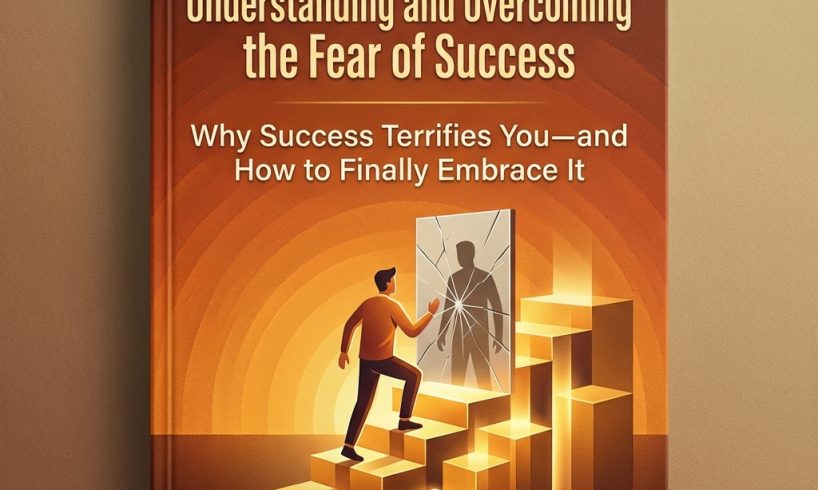

Fear of success can describe discomfort when an opportunity brings attention, responsibility, or changes you did not expect. It does not prove that you have a phobia or that you secretly want to fail. Start by identifying the specific change you anticipate, the evidence for it, and the choice you can make today.
An invitation to lead a project may sound exciting until you imagine the presentation, longer hours, and colleagues asking for answers you do not have. The useful question is more precise than “Why am I afraid of success?” It is “Which part of this opportunity needs information, support, or a boundary?” This article helps you sort those parts before accepting, declining, or delaying a decision.
What people mean by fear of success
People use the phrase for several different experiences. One person worries that an achievement will raise everyone’s expectations. Another is concerned about being visible in a setting where mistakes receive harsh attention. Someone else wants the work itself but not the travel or schedule that comes with the title. Calling all three reactions “self-sabotage” can obscure practical differences.
“Achievephobia” appears in the name of the accompanying ebook, but it is not a diagnosis you can assign yourself from a search result. An intense fear that persistently limits your activities deserves a conversation with a qualified professional. A reasonable concern about a poorly defined job or an unfair workload deserves attention too. The label alone cannot determine which response fits.
Consider a fictional designer, Maya, who is invited to manage a small team. She enjoys mentoring but has watched earlier managers receive late-night requests. Her hesitation contains at least two parts: uncertainty about her new authority and a legitimate question about working hours. A discussion of responsibilities might answer one part; support for persistent anxiety might help with another. Neither requires Maya to declare herself broken.
Separate the event from the story about it
Write down what has actually been offered. Is there a written role description, a firm deadline, a specific payment arrangement, or merely an informal suggestion? Under that, write what you expect will happen. “I will have to answer messages every night” may be a prediction. “The last person in the role was required to be on call” is an observation you can ask about. This simple split prevents a guess from masquerading as a fact.
Then name the cost you most want to avoid. It might be less time with family, conflict with peers, a loss of control over your schedule, or the possibility of public criticism. Several costs may be real. You can ask about them without apologizing for wanting the opportunity. A decision improves when the offer is clear enough to compare with your priorities.
Avoid the opposite trap of dismissing every worry as a sign that you should say no. Some unfamiliar responsibilities become manageable with training or a defined trial period. Others remain poor fits after you learn more. The goal is to gather evidence, not force yourself to feel enthusiastic before you have enough information.
Look for a pattern, not one uncomfortable afternoon
An isolated hesitation after good news tells you little. A pattern may be more informative: repeatedly delaying an application after meeting the requirements, refusing to share completed work, or declining recognition you genuinely wanted. Record two or three concrete occasions rather than making a sweeping statement about your personality. Include what else was happening at the time.
Ask whether similar hesitation appears only in one workplace or across several settings. If it arose after a manager reacted badly to an earlier success, the environment may matter. If it follows you into unrelated opportunities and causes distress, a mental health conversation may be useful. Neither observation proves a cause; both provide more useful material than a single label.
Notice what happened after each decision. Did postponing relieve worry for an hour but cost an application? Did accepting a small invitation turn out differently from your prediction? Did a role expand beyond what was promised? These outcomes help you distinguish fear from a sound judgment about conditions. They also help you refine future questions.
Ask for the missing terms of the opportunity
Before giving an answer, request the scope in plain language. For a promotion, ask about decision authority, reporting lines, performance measures, compensation, schedule, and the support available during a transition. For a freelance project, ask what deliverables are included, how revisions work, and when payment occurs. A vague opportunity often feels more threatening because the boundaries are unclear.
You can say, “I am interested. Could you send the responsibilities and the expected time commitment so I can decide by Friday?” That is a decision process, not a confession of fear. If the other person refuses to provide basic details or pressures you to commit instantly, treat that as relevant information about the offer.
Make a short comparison with three columns in your notes: what you know, what you need to ask, and what you would need to negotiate. An unanswered question is not automatically a reason to reject the opportunity. It is a reason to avoid pretending you already know its terms.
Practice a small, reversible response
If the offer allows it, try a limited step. You might present one segment instead of chairing the whole meeting, join a trial project for a defined period, or ask to shadow the role before deciding. State how you and the other party will evaluate that step. A meaningful trial has a clear end and an option to reconsider.
Do not turn “small experiment” into an instruction to tolerate unsafe hours, disrespect, or a commitment you cannot undo. A limited step is useful when the risk is proportionate and the conditions are transparent. If a choice affects finances, contracts, or employment rights, obtain appropriate advice before signing.
After the step, record what occurred rather than whether you were “brave.” Did the work match the description? Which support helped? Was the discomfort temporary, or did the structural concern remain? This evidence lets you adjust your next decision without making your whole identity the subject of the review.
What if attention is the hard part?
Success can change how visible your work becomes. Perhaps you are comfortable doing the task but dread a public announcement or questions from colleagues. Ask whether the form of recognition is flexible. You might prefer a written summary, a smaller meeting, or time to prepare. An employer may not be able to accommodate every preference, but asking is more informative than assuming there is only one format.
You can also prepare one truthful sentence: “I appreciate the recognition and I am looking forward to the next phase.” You do not have to minimize your contribution or promise to perform at an impossible level. If others helped, acknowledge them accurately without erasing your own work. An honest response can be brief.
Repeated concern about judgment may overlap with other forms of anxiety. If it is intense, long lasting, or restricts daily life, discuss it with a professional rather than designing an increasingly elaborate set of rules for every interaction. The National Institute of Mental Health offers general information about when mental health symptoms warrant help; an article cannot evaluate your individual situation.
Respect constraints that are real
Sometimes the “fear” is a warning about a genuine mismatch. A position may require travel you cannot undertake, a schedule that conflicts with caregiving, or a pay arrangement that does not cover the added responsibility. These are not thought errors to argue away. Ask whether the terms can change and decide using the answer you receive.
Distinguish a preference from an obligation. You may value quiet work over a management title. You may want more money but not the particular route being offered. Declining a promotion after considering the actual terms can be a deliberate choice, not self-sabotage. Success can mean choosing work that fits your life.
If other people define the opportunity as “too good to refuse,” ask which costs they would bear and which costs you would bear. Their enthusiasm may be sincere but incomplete. Your decision has to include the work and responsibilities after the congratulations end.
When to seek more support
Talk with a healthcare professional if fear is persistent, severe, or disrupting work, relationships, sleep, or other daily activities. Describe what happens and what you have avoided. Do not arrive needing to prove the label “achievephobia.” The NIMH explains that mental health care can help when symptoms affect functioning; a professional can consider other explanations and suitable support.
For an employment decision, a mentor or trusted colleague may help clarify a role, but they are not a substitute for healthcare when distress is substantial. For a legal or contractual question, use qualified advice. Keeping the questions separate allows each person to help with the part they know.
Avoid promising yourself a cure by a particular deadline. A small, useful next step might be one email asking for role details, one appointment to discuss a recurring pattern, or one conversation about workload. You can make progress by getting clearer information even if the feeling has not vanished.
A two-page decision exercise
On the first page of a notebook, write the offer in one sentence, then list three facts you can verify. On the second, write the three outcomes you fear most. Mark each as a practical risk to investigate, a personal value to protect, or a prediction you cannot yet confirm. Some entries will belong in more than one group.
Next to each item, write one question or action. “What is the expected weekly schedule?” is a question for the hiring manager. “Why does praise make me feel unsafe?” may be a question to explore with a counselor. “How much time can I give this project?” is a boundary you can decide yourself. Do not demand that one person answer all three.
The purpose is to replace a single overwhelming verdict with several answerable questions. The accompanying ebook describes patterns such as downplaying wins and delaying opportunities, and proposes reflection and small experiments. It is an optional educational resource, not a test that determines whether you have a disorder.
Questions readers often ask
Does nervousness mean I should decline?
No. Nervousness alone does not tell you whether an opportunity is suitable. Read the terms, identify the concern, and ask what information would change your decision. You can still decline after that review, but your answer will rest on a clearer account of what you need.
Is every delay self-sabotage?
No. Some decisions need time because the offer is incomplete or the consequences are substantial. A repeated delay after you have the information you need may be worth exploring, particularly if it conflicts with a goal you freely chose. Describe the actual behavior rather than adopting a harsh label.
What should I say if I need time?
Ask for a reasonable date: “Thank you for considering me. I would like to review the responsibilities and respond by Thursday.” If the deadline is fixed, ask what information is available now. An honest request is more useful than an immediate answer you cannot stand behind.
Start with one accurate question
Choose the part of the opportunity that is currently least clear and ask one person who can answer it. If you have a pattern of intense fear across opportunities, also consider asking a healthcare professional for an assessment. You can value the possibility of success while remaining careful about its terms.
The educational Achievephobia ebook offers a longer framework for noticing patterns, questioning assumptions, and protecting your values as responsibilities change. Its price is $4.99 on the linked product page. You do not need to buy it to ask for clear terms, seek support, or decide what fits your life.
Sources and further reading
- NIMH, Phobias and Phobia-Related Disorders
- NIMH, My Mental Health: Do I Need Help?
- WHO, Burn-out an occupational phenomenon
This educational article and ebook are not a diagnosis, treatment plan, or a substitute for individualized medical or mental health care. For persistent distress, consult a qualified professional.
Explore the free companion articles
- Fear of Success: Why a Good Opportunity Can Feel Uncomfortable (Available September 28, 2026, 8:36 AM Pacific)
- When You Downplay a Win: How to Talk About Achievement Honestly (Available September 28, 2026, 1:50 PM Pacific)
- A Promotion You Want and Dread: Questions Before You Decide (Available September 28, 2026, 7:02 PM Pacific)
- How to Set Boundaries When Success Brings More Demands (Available September 29, 2026, 9:56 AM Pacific)
- Fear of Success or Burnout? How to Describe What Is Happening (Available September 29, 2026, 3:16 PM Pacific)