



Fear of success and burnout can both appear when a new responsibility feels unbearable, but they raise different questions. Ask whether the distress centers on what might change if you succeed, on a current workload that has become unsustainable, or on another health concern. Describe the pattern and its effect on daily life; do not use an online label as a diagnosis.
Someone may say, “I am sabotaging my career,” after missing an application deadline. Yet the same person may have been working evenings for months and unable to recover between projects. Another person may have enough time and support but feel intense anxiety about becoming visible. Those situations call for different conversations. A careful description protects you from treating every form of distress as the same problem.
What burnout means in a work context
The World Health Organization describes burnout in ICD-11 as an occupational phenomenon associated with chronic workplace stress that has not been successfully managed. Its description includes exhaustion, distance or cynicism toward work, and reduced professional efficacy. WHO also says burnout is not classified as a medical condition and applies specifically to the work context.
That description is not a home diagnostic checklist. Tiredness may have many causes, including illness, sleep difficulties, responsibilities outside work, or several issues at once. If you have persistent symptoms, discuss them with an appropriate healthcare professional. Do not decide that a work-related explanation rules out medical assessment.
Consider the pattern over time. Did you once enjoy the work but now dread it after months of excessive demands? Has the problem followed an increase in hours or loss of control over priorities? These observations can help you describe the situation to a clinician and to the person who can change the workload. They do not prove that one named condition is present.
What a fear about success may sound like
A person might say, “If this project goes well, I will have to lead the next one,” or “If people notice my work, they will expect perfection.” Those are predictions about what follows achievement. The practical question is whether the predicted demand is supported by evidence and whether it can be negotiated.
Another person may worry that success will change relationships or take them away from work they value. The concern could be realistic, exaggerated, or a mixture. Ask what has actually happened in similar situations. Did a previous award lead to an unfair workload? Has this employer explained the new role? Are you imagining a permanent obligation where there is only a one-time invitation?
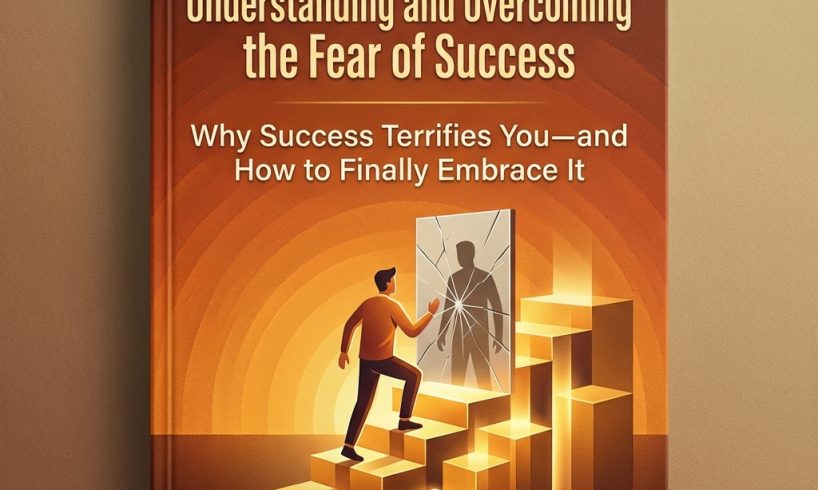
The term “achievephobia” appears in the linked ebook title as a description of fear around achievement. It should not be used to label every difficult career decision. If fear is persistent, intense, and limiting, a qualified professional can explore it without relying on a label you found online.
Make a timeline before assigning a cause
Draw a simple line from six months ago to today. Mark major changes: working hours, staffing, deadlines, illness, family responsibilities, and opportunities you declined or pursued. Then mark when you began feeling exhausted, worried, or unable to concentrate. Sequence does not establish causation, but it may reveal a question worth asking.
Be specific about what changed. “I had three weekend deadlines in May, and by June I was making errors in ordinary tasks” is more useful than “I became a failure.” “I delayed the promotion form because I could not picture speaking at the monthly meeting” points to a different practical issue. Both may be true for one person.
Do not keep an elaborate record if tracking itself makes you more distressed. A few representative examples are enough for an initial conversation. The goal is to bring useful information to care or work planning, not to prove a theory about yourself.
Test the workload explanation with concrete questions
List your current commitments and the time they actually require. Include meetings, preparation, revisions, and recovery between demanding tasks. Ask what would need to stop if a new responsibility were added. If the schedule works only by repeatedly extending the day, the issue cannot be solved solely by changing your thoughts about success.
Speak with a manager or client about priorities and resources. “The new project adds two weekly meetings and a report. Which existing deliverable should move?” is a decision question. Keep a written summary of the agreed change. If the organization cannot adjust the workload, that answer is relevant to your choice about the opportunity.
You can still seek mental health support while addressing work conditions. These are not competing explanations. A professional may help with anxiety, sleep, or distress; an employer must address a staffing or scheduling decision. Neither party can do the other's job.
Examine the prediction behind avoidance
If you repeatedly avoid a positive opportunity, write the sentence that comes before the delay: “If I apply, then…” Finish it without censoring the answer. Perhaps it is “my peers will dislike me,” “I will never have free time,” or “I will be exposed as unqualified.” Each sentence points to a different kind of evidence and question.
For “I will never have free time,” ask about the schedule and boundaries. For “I am unqualified,” compare the requirements with your work history and ask what training is provided. For “my peers will dislike me,” consider what has happened before and what support you would need if the relationship changes. Do not force all three into one generic pep talk.
Avoid using a small experiment when the action has serious consequences you cannot easily reverse. Trying a limited presentation is different from signing an unclear employment contract. The size of the step should fit the risk, and a decision with legal or financial effects may need qualified advice.
Notice symptoms beyond the workplace story
Sleep changes, persistent low mood, physical symptoms, or difficulty with ordinary daily tasks deserve attention in their own right. The National Institute of Mental Health advises seeking professional help for severe or persistent symptoms that affect functioning. Share what you are experiencing rather than insisting on a particular explanation.
If symptoms include immediate danger or thoughts of harming yourself, seek urgent help through local emergency services or the 988 Suicide & Crisis Lifeline in the United States. A work decision can wait while safety is addressed. This article cannot evaluate an emergency or provide treatment.
Even when symptoms are less acute, you do not need to wait for a crisis. A primary care clinician or mental health professional can help assess the situation. Bring a brief timeline, work demands, and the questions you want answered. State if you are unsure whether the issue is anxiety, exhaustion, a physical condition, or a combination.
A fictional comparison
Elena receives an invitation to lead a small initiative. She feels dread, but she has also been handling vacancies in her team for eight months. Her notes show frequent late evenings and little control over incoming work. Before deciding, she asks whether the vacancy will be filled and which current tasks would move. The workload question is immediate, even if she also wants help with anxiety about visibility.
Marcus receives a similar invitation in a role with a defined schedule. He sleeps adequately and enjoys his current tasks, but he repeatedly avoids sharing completed work because he predicts severe criticism. He may benefit from discussing that pattern with a qualified professional and from asking how feedback works in the new role. Neither story permits a diagnosis from a paragraph.
The example shows why an identical sentence—“I cannot take a promotion”—can conceal different needs. It is possible for the same person to experience both patterns at different times. The purpose of comparison is to ask better questions, not rank one explanation as more legitimate.
Talk to the right people about the right parts
Ask a supervisor about scope, staffing, deadlines, and authority. Ask a clinician about symptoms and appropriate care. Ask a trusted person what they have observed without requiring them to diagnose you. Keep confidential information limited to what you choose to share and what the process requires.
You might say to a manager, “I would like to evaluate the new role after we review current priorities and support.” To a clinician: “I have been exhausted and anxious about opportunities for three months. Here is how sleep, work, and daily life have changed.” These are different conversations, and each can be productive.
If the organization presents the role as a reward you must accept immediately, ask for a written description and a response date. Feeling grateful does not remove your need to understand the terms. If you are already struggling, a rushed commitment may make it harder to sort out what would help.
Questions readers often ask
Can burnout and anxiety occur together?
Yes, experiences can overlap, but an article cannot determine what is happening for you. Describe both the conditions and your symptoms to an appropriate professional. Addressing workplace demands remains important even when you receive help for anxiety.
Does being tired mean I should refuse every opportunity?
No. Tiredness is information, not a permanent career verdict. Assess its cause and the new role's conditions. Some opportunities bring support or a healthier schedule; others increase demands. Do not assume either outcome without asking.
Is fear of success a medical diagnosis?
The phrase can describe a pattern, but it is not a substitute for a professional assessment. If a concern affects your functioning, bring concrete examples to a qualified clinician rather than trying to establish a diagnosis from the ebook title or this article.
Choose a next step that answers a real question
Write two lists: current conditions you can verify and future outcomes you fear. Bring the work-related questions to the person responsible for the role and the health-related questions to a clinician. You can postpone a conclusion about the label while taking practical action on both lists.
The $4.99 Achievephobia ebook offers an educational framework for reflecting on achievement, self-defeating patterns, and sustainable growth. It is not a burnout assessment or a substitute for care. You can use its ideas alongside, not in place of, clear information about your work and health.
One useful test of a proposed change is to ask what evidence would alter your view. If a reduced workload and protected rest make the opportunity appealing again, your current conditions deserve attention. If adequate support still leaves you uneasy about greater visibility, explore that feeling without shame. If neither experiment is possible, record the missing information and seek it before a deadline. You do not owe anyone an instant, perfectly labeled explanation for a complicated experience. You do owe yourself a decision made with enough facts to protect your time and well-being.
Sources and further reading
- NIMH, Phobias and Phobia-Related Disorders
- NIMH, My Mental Health: Do I Need Help?
- WHO, Burn-out an occupational phenomenon
This educational article and ebook are not a diagnosis, treatment plan, or a substitute for individualized medical or mental health care. For persistent distress, consult a qualified professional.
Explore the free companion articles
- Fear of Success: Why a Good Opportunity Can Feel Uncomfortable (Available September 28, 2026, 8:36 AM Pacific)
- When You Downplay a Win: How to Talk About Achievement Honestly (Available September 28, 2026, 1:50 PM Pacific)
- A Promotion You Want and Dread: Questions Before You Decide (Available September 28, 2026, 7:02 PM Pacific)
- How to Set Boundaries When Success Brings More Demands (Available September 29, 2026, 9:56 AM Pacific)
- Fear of Success or Burnout? How to Describe What Is Happening (Available September 29, 2026, 3:16 PM Pacific)