


Easy PDF Answers · September 22, 2026 · Educational information
Ablutophobia is an intense fear of washing or bathing. The word can help someone name a difficult experience, but an online definition cannot tell you why bathing feels hard in your particular situation. A qualified professional can assess the concern and discuss appropriate support.
Searching for the term may be your first attempt to put a private problem into words. You do not need a polished explanation to begin. A simple description of what happens and how it affects your routine can be more useful than trying to diagnose yourself.
What does the term describe?
Medical News Today’s overview of ablutophobia describes a pronounced fear connected with washing, bathing or showering. This is different from occasionally delaying a shower or preferring another way to wash. The term describes fear, rather than a judgment about someone’s cleanliness or character.
The broader category of specific phobias involves intense fear and avoidance related to a particular object or situation. The National Institute of Mental Health explains that the fear is out of proportion to the actual danger. Determining whether this applies to an individual requires assessment, not a checklist in a blog post.
Describe the activity that is difficult
“Bathing” can mean several tasks. Washing your face, standing in a shower, washing your hair and entering an unfamiliar bathroom are not identical experiences. If you seek help, describe the particular activity instead of assuming that every type of washing must feel the same.
For example, someone might say, “Using the sink is manageable, but I become frightened when I think about closing the shower door.” This is a hypothetical communication example. It does not establish a diagnosis, but it gives a care provider more information than “I am bad at looking after myself.”
Separate what you notice from what you assume
Try making two short notes. In the first, record an observation: “I postponed washing my hair three times this week.” In the second, record a question: “Could we talk about what makes that task difficult?” Keep an explanation such as “This must be a phobia” in the question column until you have had an assessment.
Record physical discomfort, accessibility problems or privacy concerns as well. They deserve attention in their own right. You do not have to decide which concern is most important before asking for help, and you should not dismiss pain as anxiety because you found a name online.
When is it worth seeking support?
If the difficulty is disrupting daily life or personal care, discussing it with a qualified care provider is a reasonable next step. You can begin with primary care and ask what assessment or referral would be appropriate. You do not need to wait until you have found the perfect term.
Before the appointment, choose one recent example, one way the problem affects you and one question you want answered. Keep the notes brief enough to use during the conversation. If speaking feels awkward, you can ask whether you may hand over a written description.
What can a guide help with?
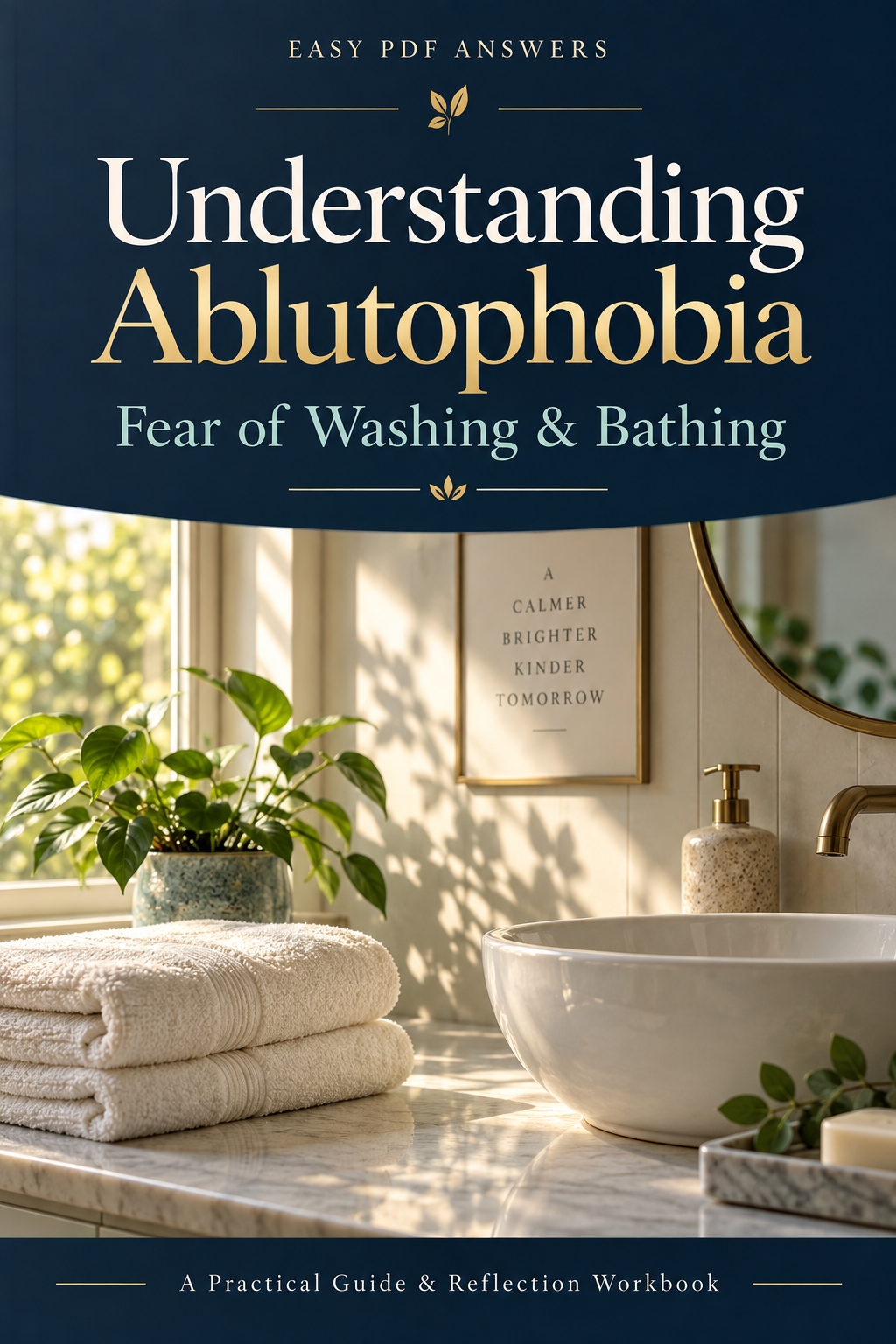
A good educational guide can organize information and provide space for reflection. It cannot examine your health, understand your full history or replace individualized care. Our 10-page workbook provides writing prompts and appointment questions; it does not prescribe a bathing routine or promise a cure.
Common questions
Does avoiding a shower mean I have ablutophobia?
No. That behavior alone does not explain its cause. Describe what you experience and let a qualified professional help you understand it.
Do I need to buy anything before asking for help?
No. You can take notes on ordinary paper and use the free sources linked above. The workbook is an optional way to keep your thoughts together.
Continue exploring this topic
- How to Describe Bathing Anxiety Before an Appointment
- Bathing Difficulties: Questions Beyond a Phobia Label
- How to Support Someone Who Is Afraid of Bathing
- Ablutophobia Treatment: Questions to Ask a Therapist
Browse the Phobias hub for other educational articles.
About this article: Prepared with AI assistance for Easy PDF Answers using the sources linked in the text. Not medically reviewed. Examples are hypothetical, and the writing prompts are not clinical assessments. This article does not provide diagnosis or individualized treatment. Seek qualified care for concerns affecting your health or daily life.