


Quick answer: Evaluate acerophobia resources by checking what the source actually supports. A dictionary can explain the word; clinical guidance can explain broader conditions. Neither proves a personal diagnosis or validates a promised cure.
Check whether the page is defining a word or explaining evidence
An uncommon phobia term can appear on many websites without each page adding reliable medical information. Repetition is not the same as independent evidence. Ask whether the article points to professional guidance or simply repeats a list of names.
Wiktionary records acerophobia as an uncommon word related to sourness. That is useful linguistic context. It does not establish prevalence, a diagnostic category or a treatment schedule. Be especially careful when a page moves from a dictionary definition to confident medical claims without explaining the connection.
Look for the right source for the question
For a persistent change in taste, information from a health agency about taste disorders is more relevant than a list of phobias. For increasingly restricted eating, look for qualified guidance about eating concerns. For an assessed specific phobia, broader professional phobia information may help you understand treatment discussions.
A source can be reliable and still answer a different question from yours. Write your actual question first, then check whether the page addresses it. “What does this word mean?” and “Why do I have a sour taste?” require different kinds of information.
Be cautious about promises and invented authority
A claim such as “cured in three days” should not replace individual assessment. Look for a named publisher, an explanation of scope, sources and an honest distinction between education and treatment. A medical-looking design or a long reference list does not guarantee that the claims match the references.
If a page says it was clinically reviewed, it should identify the reviewer and their relevant role. Our materials do not claim medical review or clinician authorship. They provide sourced context and original communication worksheets, with the limitations stated openly.
Keep useful notes without collecting endless material
Save a small number of relevant sources and write what each one helps answer. One could define the term, another explain taste assessment and another help you prepare questions. You do not need an archive of every page that mentions sourness.
If advice conflicts, bring the specific disagreement to a qualified professional rather than repeatedly changing your eating or treatment. Do not stop medication, ignore an allergy restriction or begin a tasting challenge because an online article sounds certain.
Judge a paid guide by its actual contents
Check the page count, sample description, audience and what is included. A guide may be useful because it organizes information and writing space, even though the medical sources themselves are free. It should not imply that buying it is required to obtain help.
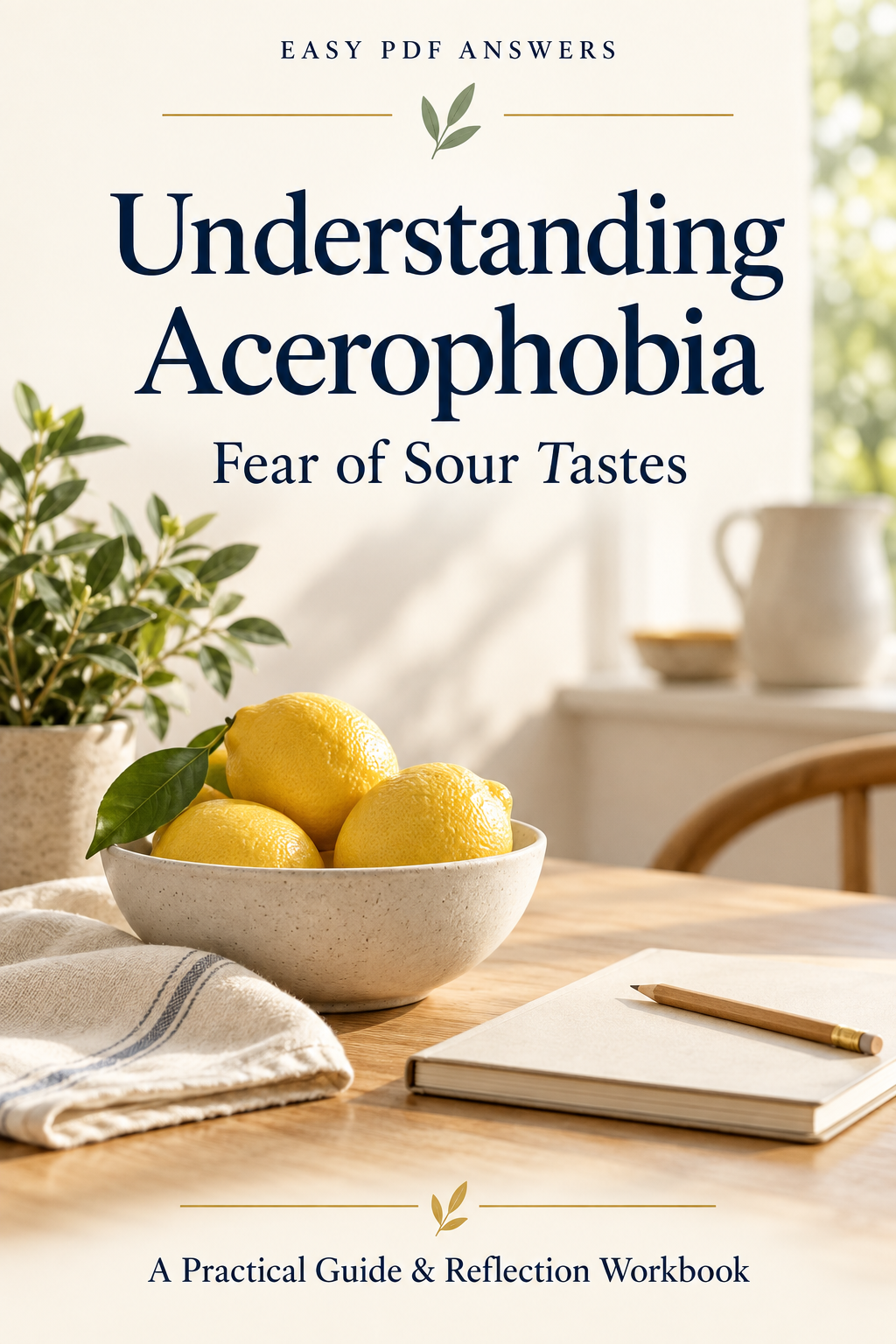
Our 10-page PDF includes a terminology explanation, practical distinctions, appointment preparation, a support page, worksheets and sources. It is a personal-use educational download, not a diet or treatment program. Choose it only if that format is useful for you.
Continue exploring Acerophobia
- What Is Acerophobia? Understanding Fear of Sour Tastes
- Disliking Sour Food or Feeling Afraid? Useful Questions
- How to Explain Sour-Taste Anxiety at an Appointment
- Supporting Someone Who Fears Sour Tastes at Meals
Sources and further reading
- Wiktionary: Acerophobia, terminology only
- NIDCD: Taste Disorders
- NIMH: Phobias and Phobia-Related Disorders
About this article
Published by Easy PDF Answers with AI assistance. This educational article has not been clinically reviewed and does not provide a diagnosis or personalized treatment. Examples are hypothetical. The linked sources offer further information; their inclusion does not imply endorsement of our paid workbook.