


Phobia guides / Aeroacrophobia articles
Before replying to a rooftop invitation, ask where the gathering takes place, how guests reach it, and whether indoor participation is available. Explain a practical preference without promising that you will feel comfortable. A social event should follow venue safety rules and should not become an unexpected test of your fear.
An invitation may say “drinks with a view” while leaving the details unclear. If open high places are difficult for you, knowing the arrangement can make the reply more informed. This article focuses on social planning, respectful communication, and the difference between an ordinary accommodation and treatment.
Clarify what rooftop means for this event
Some gatherings are entirely outdoors. Others use an indoor restaurant with optional terrace access. A photograph of a skyline may not tell you where the meal or conversation happens. Ask the host for the actual arrangement before assuming that you must spend the evening beside a railing.
The route matters too. Find out whether guests use an enclosed lift, an open staircase, or another access route. You are asking for practical information, not asking the host to assess your health. If they do not know, the venue may be able to explain the route and seating layout.
Keep the question concise: “Is the dinner indoors or on the terrace, and is there an indoor area where guests can take part?” This gives the host something answerable. A request for a guarantee that the venue will not feel frightening is much harder to meet and may distract from the details that could inform your decision.
Identify what you want from the occasion
Perhaps you want to celebrate a friend's promotion, meet relatives, or attend a work reception. Naming that purpose helps you consider the options offered. You may value the conversation more than the view, or the meal more than a group photograph outdoors. Those preferences can shape a practical request.
Avoid making the invitation a measure of personal worth. Attending every part of an event is not the only way to show care for someone. At the same time, if fear repeatedly prevents activities you value, that ongoing effect deserves attention. A single RSVP and a longer-term care question are related but separate decisions.
You can explain your aim to the host: “I would like to join the celebration, and an indoor table would make the arrangement easier for me.” This communicates interest and a concrete preference. It does not require a detailed account of every previous difficult experience.
Ask for an arrangement the host can evaluate
A request might concern indoor seating, the location of the group, or clarity about whether terrace access is optional. State the request early enough for the host to consider it. Last-minute changes may be possible, but they should not be assumed, especially when the event has fixed reservations or a limited layout.
If the host offers an alternative, ask only the remaining practical questions. For example, an indoor table may still require an open access route. Clarifying that detail is useful. Repeatedly asking whether the arrangement is definitely perfect may not add information and can leave both people unsure what answer would be sufficient.
Respect the venue's constraints and other guests' needs. A host may be unable to move the whole event. That limitation is not automatically a judgment about your concern. You can consider the actual options without forcing the host to promise an outcome outside their control.
Decide what you want to disclose
You can use ordinary words: “Open high spaces are difficult for me.” There is no obligation to use the uncommon term aeroacrophobia in a social message. The label may invite questions that are less useful than a clear explanation of the arrangement you are asking about.
Share health details only to the extent you choose. A friend planning a birthday meal usually needs to understand the request, not receive a full symptom history. If you need formal workplace support for a professional event, ask the appropriate contact about the process and required information.
A short boundary can help: “I would rather not discuss the health details in the group, but I appreciate you checking the seating.” This allows the host to assist without turning the event into a public conversation about your fear. Privacy and practical planning can coexist.
Keep encouragement consensual and ordinary
A well-meaning companion may suggest that you “just have a look” over the edge or join a photograph closer to the view. Make your preference clear in advance if that would be unhelpful. Nobody should pull you toward a railing, surprise you with a route change, or treat refusal as a challenge to overcome.
Support can involve simple tasks: meeting at the entrance, asking staff a route question, or staying with the group in an agreed area. These actions help the event run smoothly without pretending to provide therapy. If you are in treatment, discuss any specific plans with the professional involved rather than improvising them at the party.
NIMH describes treatment options for phobias, but a social invitation is not itself a treatment plan. Exposure-based work, when appropriate, requires attention to the person and circumstances. It should never mean disregarding venue rules or ordinary fall prevention.
A fictional example: an anniversary reception
Imagine Elena receives an invitation to a reception at a rooftop restaurant. The announcement includes a terrace photograph, and she assumes the whole evening will be outdoors. She asks the organizer where dinner and speeches will take place. The reply explains that the main event is inside, with optional terrace access afterward.
Elena confirms that she wants an indoor place and tells a companion that she does not want pressure to join the outdoor photographs. She also recognizes that open high settings have affected several other invitations. She writes down that broader pattern for a healthcare conversation rather than asking the organizer to solve it.
The example demonstrates clarification, not a guaranteed solution. Another venue may have no indoor option, and another reader may find the access route difficult even if dinner is inside. The useful step is to obtain the actual details and decide from those facts rather than from an image or an assumption.
Plan for a change without scripting every minute
Events sometimes move rooms or alter seating. Ask whom to contact if the arrangement differs on arrival. A named host or staff member can clarify what has changed. This is a practical contingency, not a demand that the entire event remain exactly as imagined.
Avoid trying to script every movement in advance. You may not be able to know where every guest will stand or when every photograph will happen. Focus on the information necessary for your participation and any genuine health or access needs. If uncertainty itself becomes the main obstacle, that is useful to discuss in care.
If the venue gives a safety instruction, follow it even when it differs from your preferred route. Do not enter restricted areas or use an unsafe shortcut to avoid an open space. Ask staff for appropriate assistance or alternatives rather than making an improvised route decision.
Notice physical symptoms without assigning a cause
If you experience dizziness, unsteadiness, or another concerning symptom, treat it as information worth assessing. NIDCD explains that balance difficulties can have various causes. A fear label should not automatically explain a physical episode, particularly if similar symptoms occur elsewhere.
At the event, prioritize safe assistance rather than continuing an optional activity to avoid embarrassment. Let an appropriate person know if you need help. For severe or urgent symptoms, seek medical assistance. The social importance of the occasion does not make it necessary to ignore health concerns.
Later, describe both the setting and the symptom accurately to a professional. Do not decide that the rooftop caused everything or that anxiety must explain it. A clear account gives the clinician more useful information than a confident conclusion based on the location alone.
Reply in a way that closes the practical loop
Once you have the information needed, give the host a clear response within the event's timeframe. If you are attending with an agreed arrangement, summarize it briefly. If you are unable to attend, you can express interest in another way without providing a lengthy defense of the decision.
Avoid leaving the host responsible for repeatedly checking whether you are now certain. They can confirm the arrangement they control; they cannot settle every possible feeling about the evening. If you need further professional advice before deciding, say when you expect to respond rather than keeping the plan indefinitely unclear.
A useful reply might be: “Thank you for confirming the indoor table and enclosed route. I will join the dinner and skip the optional terrace portion.” This is an example of logistical clarity, not a recommendation that every reader make the same choice. Your circumstances and any care advice may differ.
Reflect on what mattered after the occasion
If you want to make a note, focus on participation and unanswered questions. Perhaps you enjoyed the conversation but found the access information incomplete. Maybe you noticed that fear affected the days before the event more than the event itself. Those distinctions can guide a future practical request or a professional discussion.
Do not judge the evening solely by whether you felt afraid. An event can contain discomfort and still provide useful information about your needs. Conversely, feeling comfortable once does not require you to promise the same reaction at every future venue. Keep the record descriptive rather than predictive.
The longer-term question is whether the pattern is restricting life in ways you want help addressing. NIMH notes that avoidance can interfere with functioning. If that describes your experience, seek assessment without waiting for a particularly dramatic event or a perfect term for the concern.
Keep the host’s practical reply with the invitation if that helps you remember it. A single saved message is easier to refer to than repeatedly reconstructing the conversation. If a relevant detail changes, ask about that change specifically rather than restarting every question from the beginning.
Questions about rooftop invitations
Is asking about indoor seating rude?
A concise request made respectfully gives the host a chance to explain what is possible. They may have limits, and you can consider those limits in your reply. Asking is different from demanding that the entire event be redesigned.
Should a friend push me to stay outside longer?
A social companion should respect agreed boundaries and safety instructions. Do not turn the gathering into an improvised treatment exercise. If you are working on fear with a professional, discuss the role of companions and planned activities with them.
How can the PDF help me prepare?
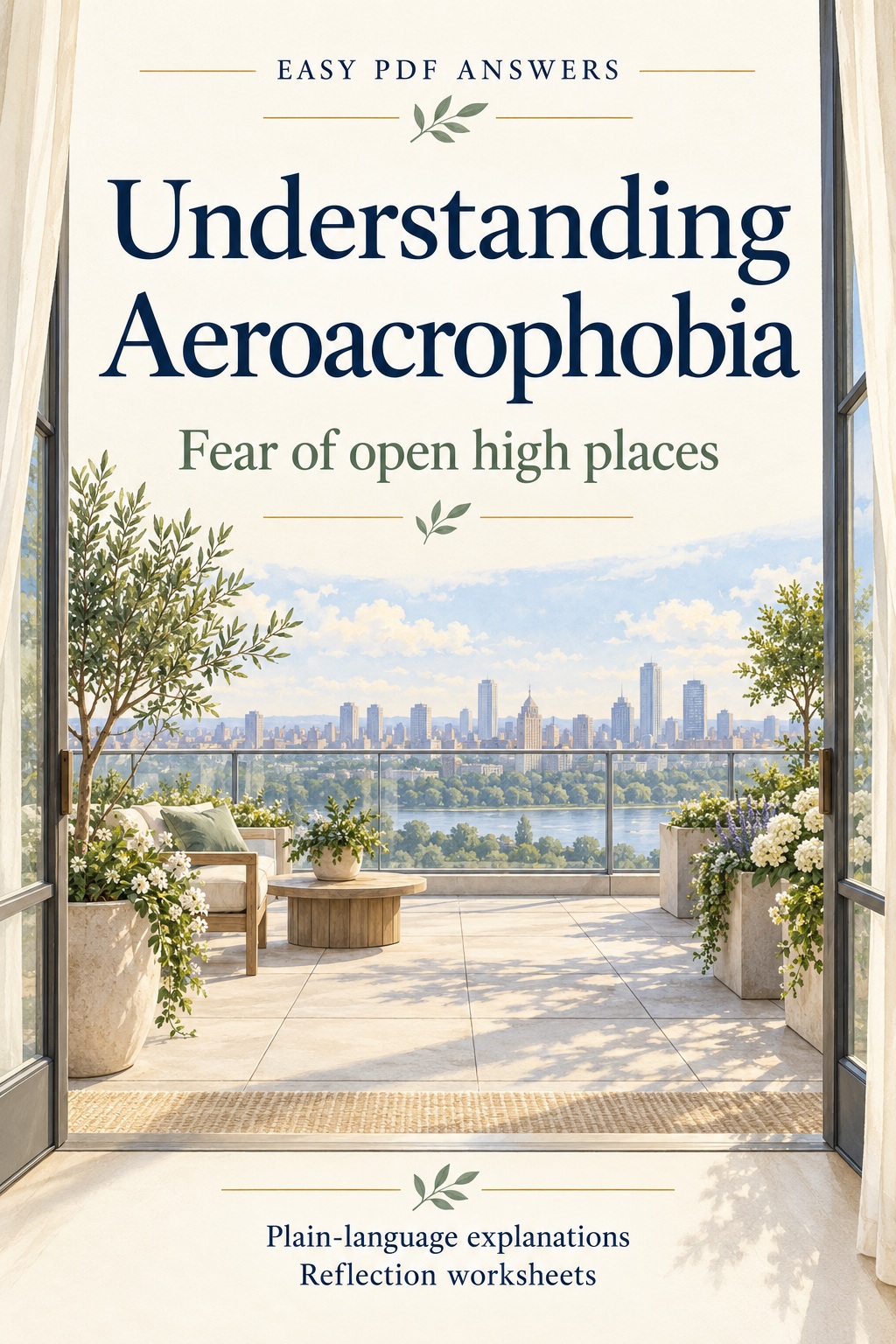
Understanding Aeroacrophobia includes two printable worksheets for describing one situation and preparing the next conversation. Within its 12 pages, you will also find explanations of exposed settings, role distinctions, and a fictional worked example. Use it to organize the questions you want answered before replying, while keeping the invitation and any healthcare decisions in their proper context.
For another part of this subject, read Open Stairs and Atriums: Asking About a Building Route. The complete reading list and availability times are below.
Sources and further reading
Sources checked September 22, 2026. References provide general background and do not endorse this article or the paid guide.
Explore the free companion articles
- Aeroacrophobia: When Open High Places Feel Difficult (Available from September 23, 2026, 3:29 PM Pacific.)
- Viewing a Home When Balconies or Open Landings Worry You (Available from September 24, 2026, 12:50 PM Pacific.)
- Invited to a Rooftop Event? Questions to Ask Before You Reply (You are reading this article.)
- Open Stairs and Atriums: Asking About a Building Route (Available from September 26, 2026, 2:38 PM Pacific.)
- Planning a Family Outing with an Optional High Viewpoint (Available from September 27, 2026, 4:41 PM Pacific.)